
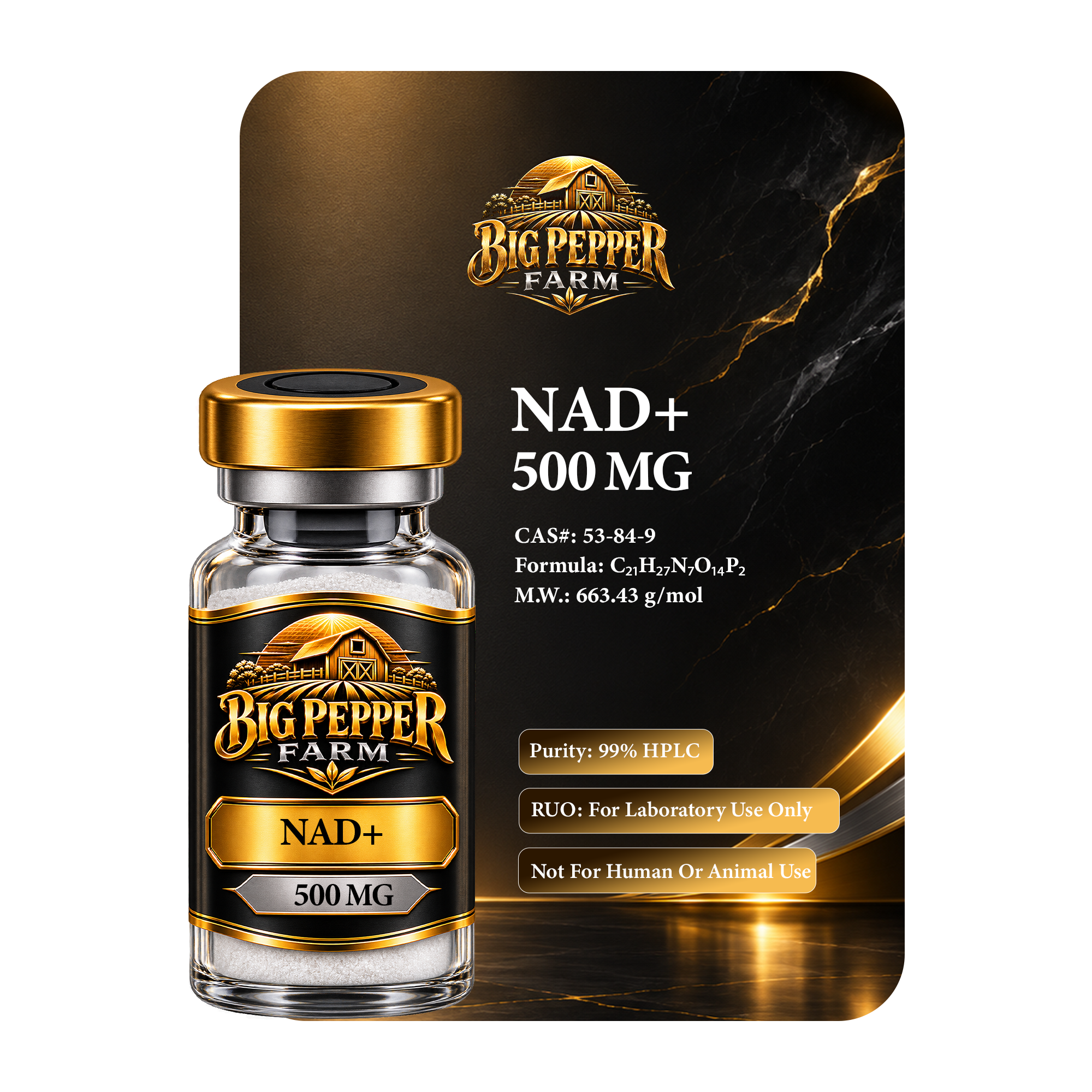
NAD+
Price range: $60.00 through $100.00
Full Name: Nicotinamide Adenine Dinucleotide, Oxidized Form
Alternative Names: β-NAD+, NAD Plus, Oxidized NAD
CAS #: 53-84-9
Molecular Formula: C₂₁H₂₇N₇O₁₄P₂
Molecular Weight (M.W.): Approximately 663.43 g/mol
Sequence: Not Applicable
Product Type: Dinucleotide Coenzyme Research Material
Description
NAD+ is the oxidized form of nicotinamide adenine dinucleotide, a chemically defined dinucleotide coenzyme supplied for controlled laboratory, analytical, and scientific research.
Its structure contains nicotinamide and adenine nucleotide components linked through phosphate-containing ribose groups. As a non-peptide research material, NAD+ does not possess an amino-acid sequence and is characterized through its molecular composition, oxidation state, molecular mass, and analytical profile.
NAD+ should be clearly differentiated from related materials such as NADH, NADP+, and NADPH. The exact product form, salt state, hydration state, purity, and lot-specific specifications should be confirmed using the applicable Certificate of Analysis.
Research Applications
NAD+ may be examined in controlled non-clinical research involving:
- Dinucleotide characterization
- Redox chemistry studies
- Enzyme-cofactor interaction research
- Molecular pathway analysis
- Comparative biochemical research
- Chromatographic characterization
- Spectrometric analysis
- Stability assessment
- Non-clinical biochemical and cellular models
Experimental findings should remain specific to the applicable research system and should not be interpreted as evidence of anti-aging, longevity-related, energy-related, metabolic, therapeutic, or clinical effectiveness.
Chemical & Structural Information
The commonly referenced oxidized form has:
Molecular Formula: C₂₁H₂₇N₇O₁₄P₂
Molecular Weight: Approximately 663.43 g/mol
Key structural characteristics include:
- Nicotinamide nucleotide component
- Adenine nucleotide component
- Two phosphate groups
- Ribose-containing dinucleotide architecture
- Oxidized molecular state
- Non-peptide chemical structure
Analytical Identification
Relevant analytical characterization may include:
- Chemical identity confirmation
- Molecular-mass assessment
- Oxidation-state verification
- Chromatographic purity testing
- Spectrometric characterization
- Related-substance analysis
- Salt or hydration-state assessment
- Lot-specific quality testing
Specifications & Documentation
Lot-specific documentation should be reviewed for:
- NAD+ identity
- Oxidation state
- CAS number
- Molecular formula
- Molecular weight
- Salt or hydration form
- Purity specification
- Related substances
- Analytical methodology
- Lot or batch information
- Certificate of Analysis
- Storage requirements
Authenticated product-specific documentation should take precedence over generalized reference specifications.
Storage & Handling
Store according to the conditions specified on the product label and Certificate of Analysis. Protect the material from environmental conditions that could compromise chemical integrity or oxidation-state stability.
Follow established laboratory procedures appropriate for dinucleotide and biochemical research materials.
Research Use Only
NAD+ is supplied exclusively for laboratory research, analytical testing, and scientific reference purposes.
Disclaimer
For research use only. Not for human or veterinary use. Not intended for consumption, administration, anti-aging use, longevity-related use, energy-related use, metabolic use, diagnosis, treatment, mitigation, cure, or prevention of any disease. No therapeutic, anti-aging, longevity-related, metabolic, energy-related, medical, or clinical claims are made or implied. Product information is supplied solely for scientific identification, documentation, and research reference.
Additional information
| Strength | 1000MG, 500MG |
|---|
Reviews
There are no reviews yet.